See this is where not going to a traditional high school really failed me- lit class. If this were a list of must-reads from Japan and India? I bet I would have a healthy start. This is from the BBC, a must-read list of books. They say that most people will have only read six of the items on here. The X's are ones I have read. A lot of them are on the other list that I had started, and have been working towards, so maybe we'll just go from this one? Either way it's fun.
1 Pride and Prejudice -
2 The Lord of the Rings - JRR Tolkien -X
3 Jane Eyre - Charlotte Bronte - X
4 Harry Potter series - JK Rowling - X
5 To Kill a Mockingbird - Harper Lee - X
6 The Bible - X
7 Wuthering Heights - Emily Bronte -
8 Nineteen Eighty Four - George Orwell - X
9 His Dark Materials - Philip Pullman -
10 Great Expectations - Charles Dickens -
11 Little Women - Louisa M Alcott -X
12 Tess of the D’Urbervilles - Thomas Hardy –
13 Catch 22 - Joseph Heller -
14 Complete Works of Shakespeare -
15 Rebecca - Daphne Du Maurier -
16 The Hobbit - JRR Tolkien - X
17 Birdsong - Sebastian Faulk -
18 Catcher in the Rye - JD Salinger -
19 The Time Traveler’s Wife - Audrey Niffenegger -
20 Middlemarch - George Eliot -
21 Gone With The Wind - Margaret Mitchell -X
22 The Great Gatsby - F Scott Fitzgerald - X
23 Bleak House - Charles Dickens -
24 War and Peace - Leo Tolstoy -
25 The Hitch Hiker’s Guide to the Galaxy - Douglas Adams - X
27 Crime and Punishment - Fyodor Dostoyevsky -
28 Grapes of Wrath - John Steinbeck -
29 Alice in Wonderland - Lewis Carroll - X
30 The Wind in the Willows - Kenneth Grahame -
31 Anna Karenina - Leo Tolstoy -
32 David Copperfield - Charles Dickens -
33 Chronicles of Narnia - CS Lewis - X
34 Emma - Jane Austen -
35 Persuasion - Jane Austen -
36 The Lion, The Witch and The Wardrobe - CS Lewis - X
37 The Kite Runner - Khaled Hosseini -
38 Captain Corelli’s Mandolin - Louis De Bernieres -
39 Memoirs of a Geisha - Arthur Golden - X
40 Winnie the Pooh - AA Milne - X
41 Animal Farm - George Orwell -
42 The Da Vinci Code - Dan Brown - X
43 One Hundred Years of Solitude - Gabriel Garcia Marquez -
44 A Prayer for Owen Meaney - John Irving -
45 The Woman in White - Wilkie Collins -
46 Anne of Green Gables - LM Montgomery -X
47 Far From The Madding Crowd - Thomas Hardy -
48 The Handmaid’s Tale - Margaret Atwood -
49 Lord of the Flies - William Golding - X
50 Atonement - Ian McEwan -X
51 Life of Pi - Yann Martel -
52 Dune - Frank Herbert -
53 Cold Comfort Farm - Stella Gibbons -
54 Sense and Sensibility - Jane Austen -
55 A Suitable Boy - Vikram Seth -
56 The Shadow of the Wind - Carlos Ruiz Zafon -
57 A Tale Of Two Cities - Charles Dickens -
58 Brave New World - Aldous Huxley -
59 The Curious Incident of the Dog in the Night - Mark Haddon -
60 Love In The Time Of Cholera - Gabriel Garcia Marquez -
61 Of Mice and Men - John Steinbeck - X
62 Lolita - Vladimir Nabokov -
63 The Secret History - Donna Tartt -
64 The Lovely Bones - Alice Sebold -
65 Count of Monte Cristo - Alexandre Dumas-X
66 On The Road - Jack Kerouac -
67 Jude the Obscure - Thomas Hardy -
68 Bridget Jones’s Diary - Helen Fielding -
69 Midnight’s Children - Salman Rushdie –
70 Moby Dick - Herman Melville -
71 Oliver Twist - Charles Dickens -
72 Dracula - Bram Stoker -
73 The Secret Garden - Frances Hodgson Burnett -X
74 Notes From A Small Island - Bill Bryson -
75 Ulysses - James Joyce -X
76 The Inferno – Dante -
77 Swallows and Amazons - Arthur Ransome -
78 Germinal - Emile Zola -
79 Vanity Fair - William Makepeace Thackeray -
80 Possession - AS Byatt –
81 A Christmas Carol - Charles Dickens -
82 Cloud Atlas - David Mitchell -
83 The Color Purple - Alice Walker -
84 The Remains of the Day - Kazuo Ishiguro -
85 Madame Bovary - Gustave Flaubert -
86 A Fine Balance - Rohinton Mistry -
87 Charlotte’s Web - EB White - X
88 The Five People You Meet In Heaven - Mitch Albom -
89 Adventures of Sherlock Holmes - Sir Arthur Conan Doyle -
90 The Faraway Tree Collection - Enid Blyton -
91 Heart of Darkness - Joseph Conrad -
92 The Little Prince - Antoine De Saint-Exupery -X
93 The Wasp Factory - Iain Banks -
94 Watership Down - Richard Adams -
95 A Confederacy of Dunces - John Kennedy Toole -
96 A Town Like Alice - Nevil Shute -
97 The Three Musketeers - Alexandre Dumas -
98 Hamlet - William Shakespeare -
99 Charlie and the Chocolate Factory - X
100 Les Miserables - Victor Hugo -
So far? 27.
Showing posts with label book worm chic. Show all posts
Showing posts with label book worm chic. Show all posts
Thursday, July 16, 2009

Monday, July 13, 2009
Leaving space for the divine.

So many times in life have I felt like the rest of the commitments or pressures outside of my home were sucking out the spiritual aspect of parenting and putting too much focus on the practical and the "must-do's" like making sure meals are made, baths are given, clothes are washed, play dates are organized, etc. And I let it happen. And I think this is a shame because some of the most magical aspects of being a parent for me have come when sharing with my daughter an experience with Spirit. So, I leave this book by my bed where I see it everyday, and this is a nice reminder to me to not get too bogged down in the practical so that I leave room for the spiritual, divine, and magical. I also pick it up from time to time and read it, which is even better! I get so worried sometimes about crushing the more sensitive parts of my little girls spirit, and this book has provided me much comfort and creativity in honoring the parts of her that are in tune with parts of the world most people don't see. And honoring and getting in touch with those parts of myself.
I believe that I last wrote about my experiences with discomfort in the god language with principle number one, Know that God Loves You. (I have accepted the fact that one of my biggest spiritual tasks is getting over my past experience with "GOD" and getting to know the presences looking out for me in a way that is purely my own.) I think because of this I put the book down for a while. But since getting beyond that principle I am only continually inspired by what this book is saying. It was almost as if Principle #2 catered to the UU in me. It is "Trust and Teach That All Life is Connected" and is something I wholeheartedly believe to be true. And it is a principle that is definitely at work in our home. My daughter spends a good portion of time trying to better the lives of bugs, animals, people, and plants that we see everyday because "if I were a ladybug on the sidewalk Mommy, I would want someone to help me home and not squash me!" And while reviewing the suggested journal ideas and activites to get us more involved with our community, Emily delighted in quite a few of them. Watching her express her concern for the world around her tugs at my mommy pride heartstrings, as well as moves me to help her make the world she will be living in a better place.
Principle #3 has had a most profound affect on me. It is quite simple. And it is something I really strive to do more of. It is simply "Listen to Your Child". What a difference it makes too. Lately, I have made a point to not do any work during the day while Em is home with me because that was the whole reason for not taking any classes aside from online ones this summer, was to give myself the freedom to be with my child, to see the world from her eyes, and discover where that takes us. I realize how impatient of a person I can be when I know that there are things I will need to be doing next, or when things aren't moving fast enough for me, and I believe one of the lessons I have to learn from my child is how to slow down. The other day while laying in bed at rest time, Emily put a hand on each side of my face, looked me deep in the eye and said "Mommy, I love you. And it makes me happy to play with you and not have to wait while you work." These little gems are my child revealing to me her needs, wants and desires. It was a wake up call to the fact that I was unintentionally telling my child that homework came before her. One thing I hope to foster in my relationship with my daughter is an unquestionable respect for each other and the ability to be able to say things like this to each other, now, and as she grows. I plan to re-read this chapter and try some of the suggestions they have for building in "Listening time" to daily routines with children; and also to let the very concept of making room for listening become built into my life. I don't ever want her to feel like she won't be heard when she voices her thoughts.
In following the principles and ideas picked up from this book, tomorrow I will be packing a lunch, some pens and paper, and a blanket and heading out to the arboretum where we have been watching frogs grow from eggs, to tadpole, to full-blown frog, and just taking our time to be together, to watch nature, and to draw or write what ever comes to mind. Emily has been so interested in telling stories that incorporate what she is seeing in the world around her, and I want to give her the chance to process parts of the world outside of the media obsessed world she sees on a daily basis.
Sunday, June 28, 2009
30 books to read before your 30
I found this list of books everyone should read before they are 30. So far, with 2 years left, I am failing. The small print ones are the ones I have read and actually remember enough to count for something. I read others in high school but was too busy being a bitter unhappy teen to actually try at school, so they don't count...
- Siddhartha
by Hermann Hesse – A powerful story about the importance of life experiences as they relate to approaching an understanding of reality and attaining enlightenment.
- 1984
- To Kill a Mockingbird
- A Clockwork Orange
- For Whom the Bell Tolls
- War and Peace
- The Rights of Man
- The Social Contract
- One Hundred Years of Solitude
- The Origin of Species
- The Wisdom of the Desert
- The Tipping Point
- The Wind in the Willows
- The Art of War
- The Lord of the Rings
- David Copperfield
- Four Quartets
- Catch-22
- The Great Gatsby
- The Catcher in the Rye
- Crime and Punishment
- The Prince
- Walden
- The Republic
- Lolita
- Getting Things Done
- How To Win Friends and Influence People
- Lord of the Flies
- The Grapes of Wrath
- The Master and Margarita
- BONUS: How To Cook Everything
- BONUS: Honeymoon with My Brother
Sunday, June 21, 2009
Hairstyles of the Damned review
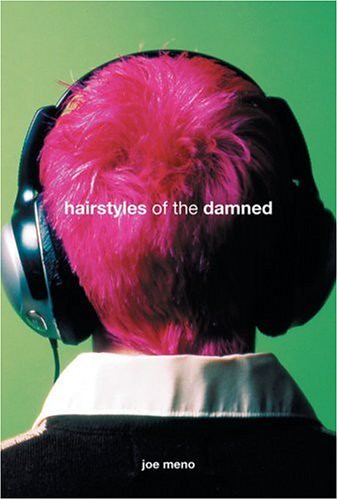
This book was recommended by someone I know. I will admit that the cover was what caught my eye most about this book. Should have been a sign right then and there that I should put it down. But ya know. I didn't. So there. It's angsty and may have been appealing 15 years ago in an "I'm a teenage outcast looking for something to identify with" kind of way. It's also a little to much. I read the first part, was mildly interested in the narrator but just couldn't identify enough to keep going. I skimmed through the rest to see what happens and put it down.
Overall opinion? Meh.
Saturday, June 6, 2009
oh books
I want to read this book about nature deficit disorder. We talked about it briefly in my global health class the other day and it got me to thinking. What are the effects on childrens' and society's development of the continuously decreasing exposure to natural and wild lands? I think about the role that the forest played in my development and I can't even begin to fathom what I would be like or the life I would lead had I not had the incredible opportunity to explore that world. Had I not been shown that so much life exists there, the plants we eat, and the hidden magical things in the woods, like the whirlpools and natural hot springs we used to find.
It is a scary thought that children grow up AFRAID of what is found in nature because as they age that fear leads them to put effort into avoiding or getting rid of whatever they are afraid of, which is the last thing we need, really.
Let's all just go camping!
It is a scary thought that children grow up AFRAID of what is found in nature because as they age that fear leads them to put effort into avoiding or getting rid of whatever they are afraid of, which is the last thing we need, really.
Let's all just go camping!
Subscribe to:
Posts (Atom)